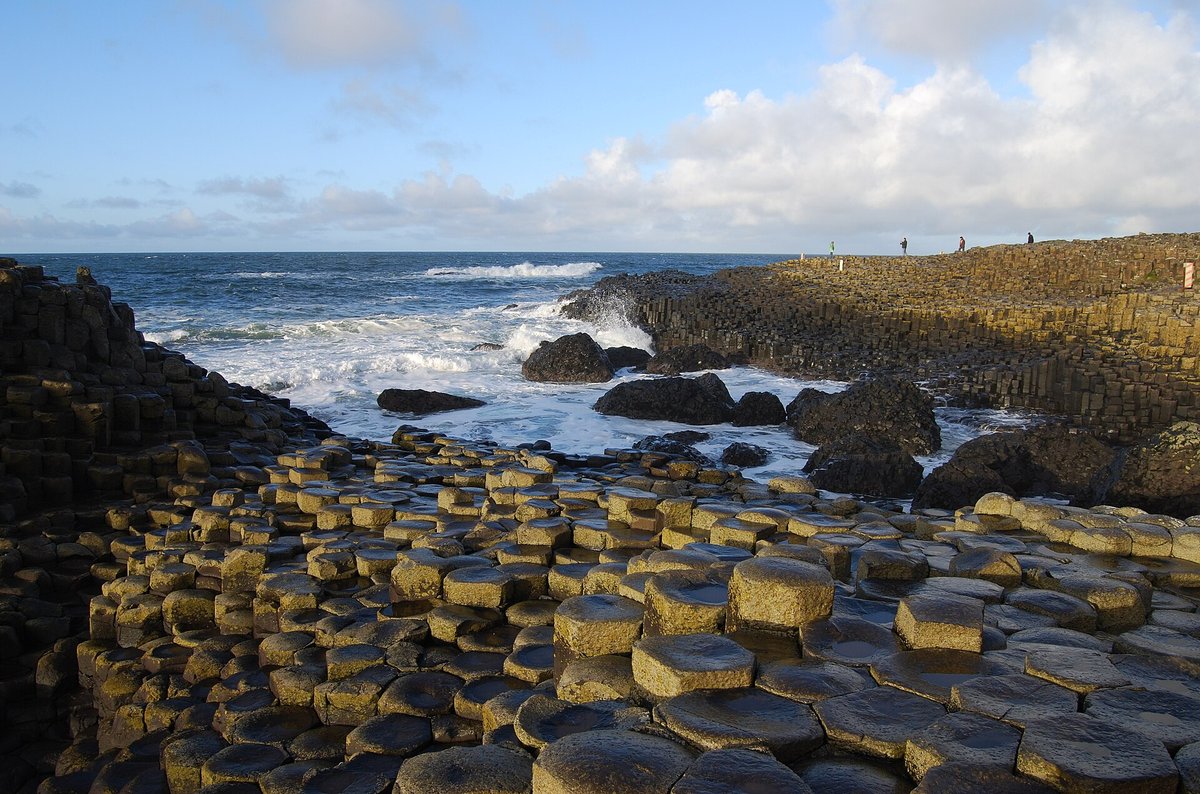
Giant's Causeway Storm Season — Antrim Northern Ireland
The Giant's Causeway on the Antrim coast — 40,000 interlocking basalt hexagonal columns formed by the cooling of 60-million-year-old lava flows, the columns' perfect geometric regularity arising from the physics of solidification stress rather than any engineering — is most powerfully encountered during winter storms from November through March when Atlantic waves crash over the lower columns and the spray reaches the upper Giant's Gate causeway in conditions that reveal the formation's geological power at its most dynamic. The storm approach (hearing the waves' impact on the columns from the visitor centre 400 metres away, the sound distinct from any other wave-on-rock sound due to the columns' resonance) and the wave's withdrawal (revealing the columns' surfaces briefly before the next wave comes) creates a geological encounter of physical immediacy quite different from the summer's tourist experience. The columns' size range (from the 12-metre 'Giant's Boot' at the causeway's far end to the centimetre-scale hexagons visible in the cliff face's cross-section) creates a geometry lesson in geological scale across the same 500-metre walk.
About this spectacle
During winter storms from November through March, the Giant's Causeway transforms into something far beyond a geological exhibit. Standing at the upper Giant's Gate level, visitors hear Atlantic waves striking the 40,000 interlocking basalt hexagonal columns from 400 metres away — a resonant, deep percussion unlike any ordinary wave-on-rock sound. When waves crash over the lower columns, spray rises to reach the upper causeway, drenching anyone standing there. Between waves, the columns' surfaces are briefly revealed: perfect hexagons glistening, some just centimetres across in cliff cross-sections, others rising 12 metres at the causeway's far end. The geometric regularity — born from 60-million-year-old lava cooling physics, not human design — becomes paradoxically more vivid when battered by the sea. The 500-metre walk from visitor centre to causeway tip passes through escalating sensory intensity: wind, spray, sound, and the sight of columns disappearing and reappearing under Atlantic surge. In summer this is a crowded UNESCO site; in winter storms it is raw, physical, and unmistakably ancient.
When to go
Jan — Dec, peak Nov — Mar
Getting there
Nearest airport: BFS. Nearest city: Londonderry.
Booking options
Goyova doesn't process bookings directly. When you tap "Plan this trip" in the app, you'll see options from our partner providers — accommodation, tours, transport — with affiliate links where applicable. See our affiliate disclosure for details.
More like this.
 Returns Jan 2027
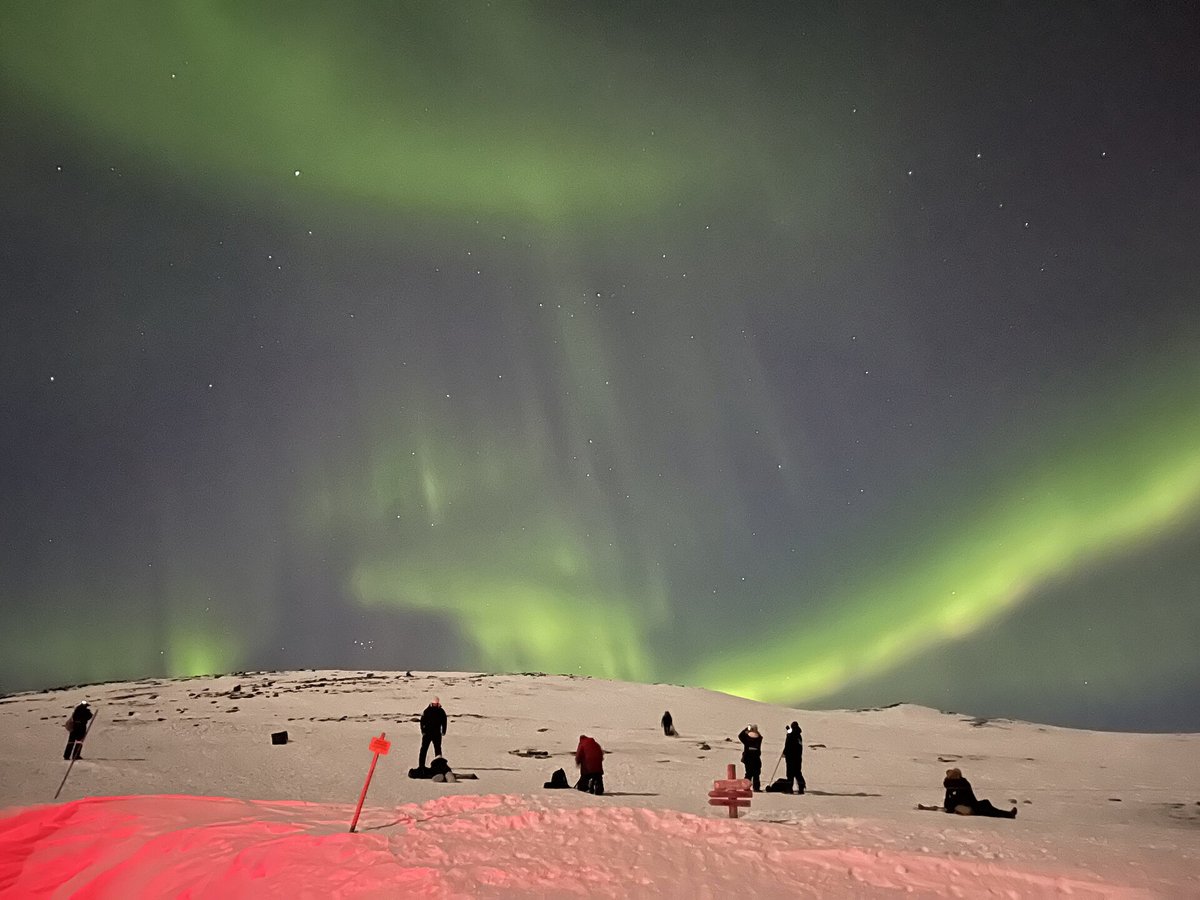
 Abisko Aurora Sky Station
Sweden
 Off-season
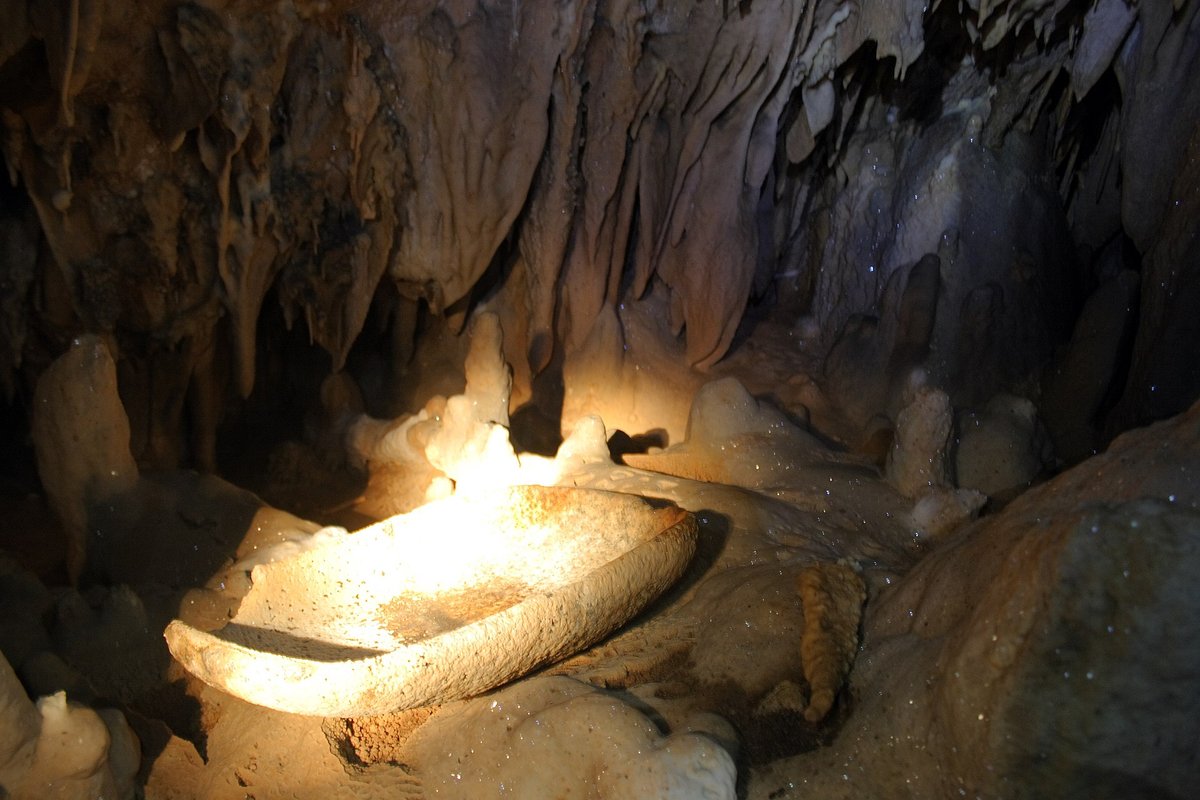
 Actun Tunichil Muknal — Cayo Belize
San Ignacio, Cayo District, BZ
 Peak season
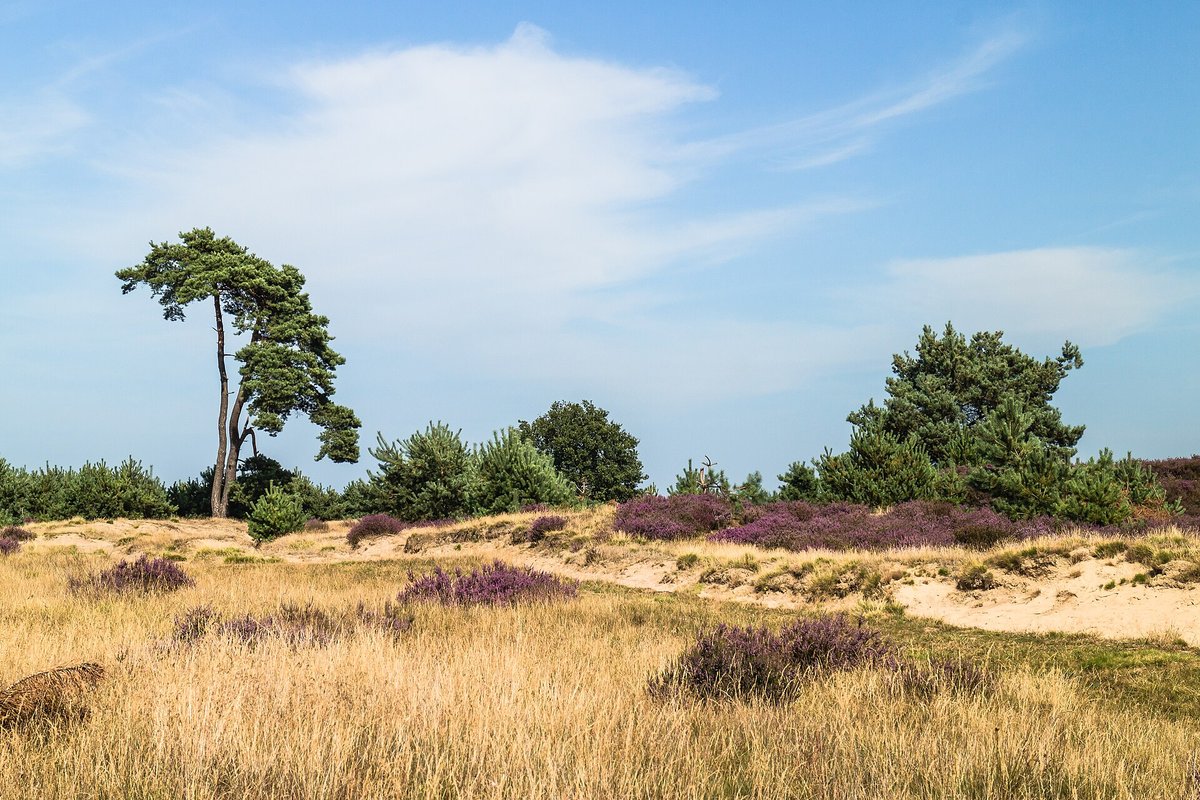
 Aekingerzand
NL