 Peak season
 Tibetan Antelope Migration — Chang Tang
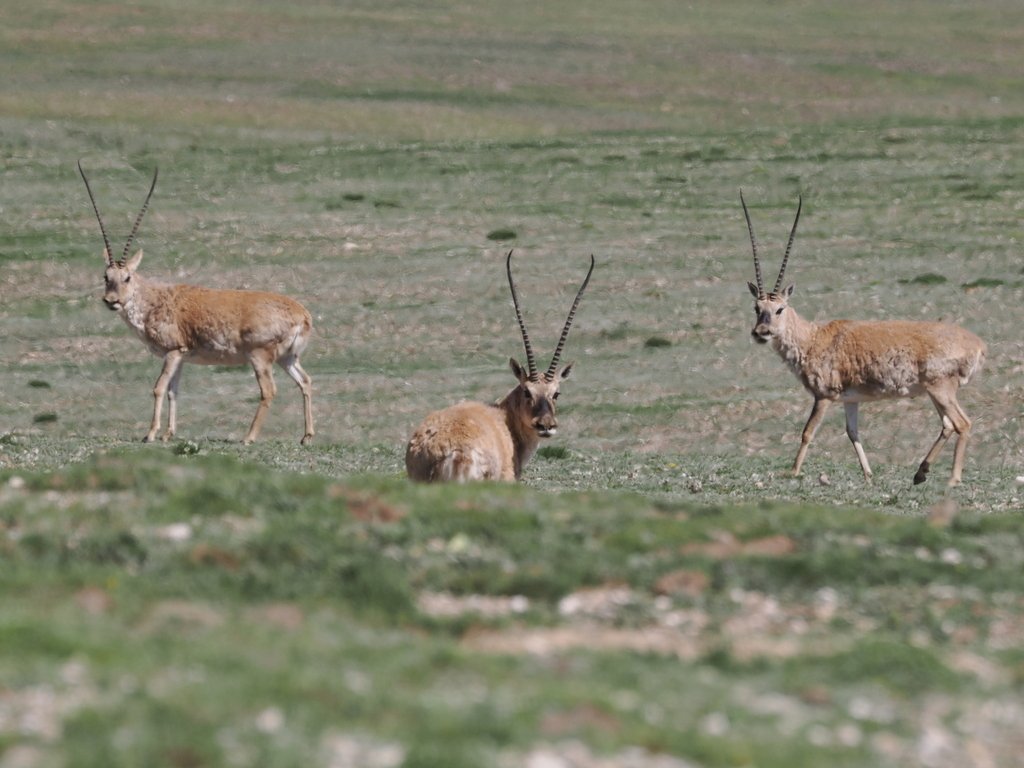
Each year between May and July, female chiru — Tibetan antelopes — undertake one of the world's most extreme mammal migrations, travelling up to 300 kilometres from their winter range across the Tibetan plateau to their calving grounds in the Chang Tang reserve at 5,000 metres elevation, their path crossing active roads, rivers, and areas with deep snowfall in a migration of extraordinary physical endurance by animals whose survival was threatened by poaching for their extraordinarily fine underfur — shahtoosh. The chiru's recovery from under 70,000 animals in the 1990s to over 300,000 today following Chinese anti-poaching efforts is one of conservation's great Asian success stories, and watching the spring migration columns — thousands of pregnant females moving in streams across the open plateau — from the Tibetan highway between Golmud and Lhasa creates one of the most accessible large mammal migration encounters in Asia. The ewes give birth within days of arriving at the calving grounds and the newborn chiru standing on their feet within hours on the windswept plateau at 5,000 metres is one of wildlife's most extreme nativity scenes. The Tibetan plateau's vast scale, its sky the deepest blue in the world at altitude, and the spiritual significance of this landscape to Tibetan Buddhism add dimensions of grandeur to the wildlife encounter. Tibetan wolf packs follow the migration routes.
About this spectacle
Each May through July, thousands of pregnant female chiru — Tibetan antelopes — stream northward across the Chang Tang plateau in one of Asia's most dramatic large mammal migrations. Travelling up to 300 kilometres at elevations around 5,000 metres, the columns of animals cross roads, rivers, and snowfields with extraordinary endurance. Visitors watching from the Golmud–Lhasa highway witness rivers of tawny-coated females moving in near-silence against a vast, wind-scoured landscape under an almost violently blue high-altitude sky. Within days of arriving at the calving grounds, newborns stand on their feet on the freezing plateau — one of wildlife's most extreme birth scenarios. Tibetan wolf packs shadow the migration, adding predator tension. The chiru's recovery from fewer than 70,000 individuals in the 1990s to over 300,000 today makes every sighting carry the weight of a conservation triumph. The sheer open scale, the columns of animals, the raw cold, and the altitude-thinned air make this an encounter of overwhelming physical and visual intensity.
When to go
May — Jul
Getting there
Nearest airport: LXA. Nearest city: Lhasa.
Booking options
Goyova doesn't process bookings directly. When you tap "Plan this trip" in the app, you'll see options from our partner providers — accommodation, tours, transport — with affiliate links where applicable. See our affiliate disclosure for details.
More like this.
 Peak season
 Aardvark Night Foraging — Kalahari Botswana
Maun, Central District, BW
 Peak season
 Aardvark Night Foraging — Kalahari South Africa
Upington, Northern Cape, South Africa
 Returns Jan 2027
 Adélie Penguin Highway — Ross Sea Antarctica
Cape Royds, Antarctica, AQ