Maerl Bed Snorkelling — Falmouth Bay
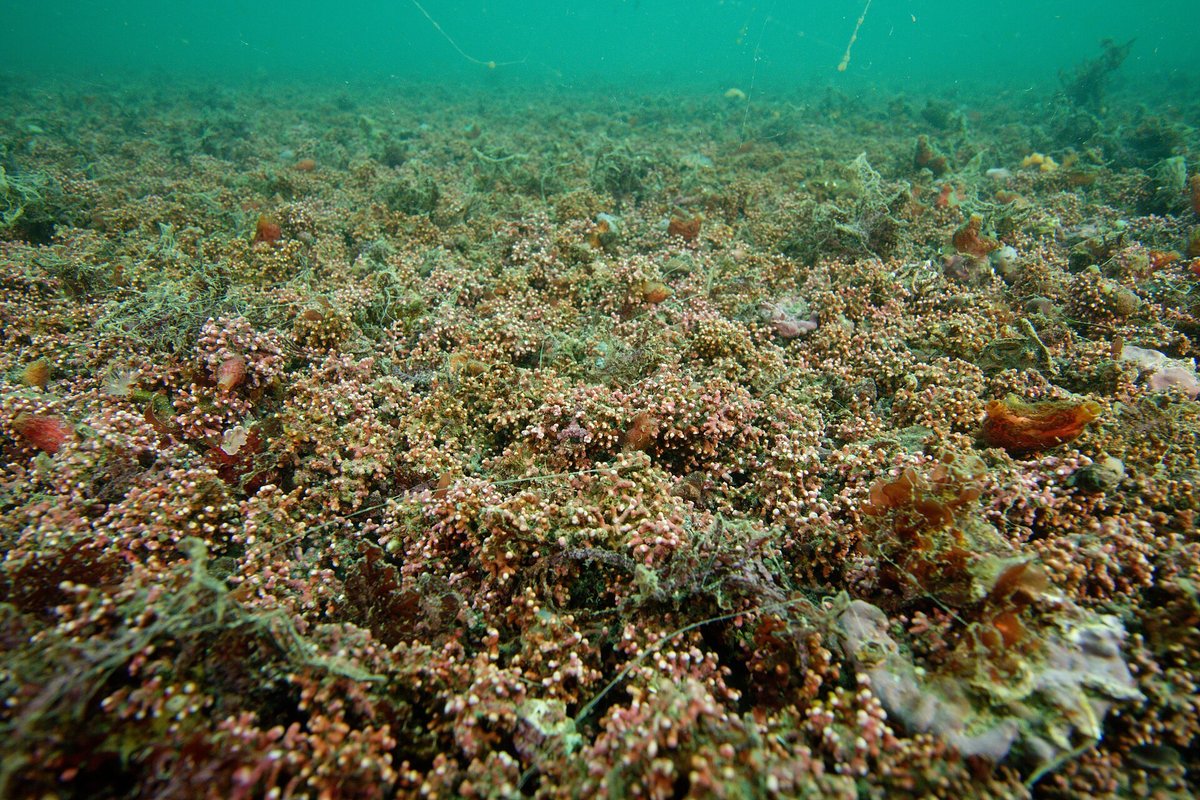
The sheltered bays of the Fal estuary and Falmouth Bay in Cornwall contain Europe's largest known living maerl beds — deep-pink calcified seaweed that grows in branched coral-like formations across the seafloor creating the most visually extraordinary shallow marine habitat in British waters, a living pink carpet of extraordinary texture and colour visible to snorkellers in just three to five metres of remarkably clear Cornish water. Maerl grows at only one millimetre per year, making the largest beds centuries old and the habitat among the most slowly accumulating marine ecosystems in the world, and the Fal's beds support populations of juvenile fish, sea urchins, stalked jellyfish, and the rare sunset cup coral in densities found in no other British marine environment. Snorkelling above the Fal maerl beds on a calm summer day — the pink branching seaweed extending to the limit of visibility in every direction below, the water filtered green-gold by the estuary — is a uniquely British marine experience of ethereal underwater beauty. Guided snorkelling tours from Falmouth operate specifically to the maerl sites in summer, and kayak trips from Mylor Harbour cross the bed locations where the pink colouration is visible through the hull in clear conditions. The wider Fal estuary adds Atlantic grey seals, little egrets, and wintering divers to a single visit.
About this spectacle
Dropping below the surface in Falmouth Bay, snorkellers enter a landscape unlike anything else in British waters: a living pink carpet of maerl — branching, calcified seaweed — spreading to the edge of visibility across the seafloor at three to five metres depth. The formations are coral-like in texture and a deep rose-pink in colour, and the water above filters the summer light to a shifting green-gold. Amid the branching fronds, sea urchins graze slowly, juvenile fish dart for cover, and the extraordinary stalked jellyfish cling almost invisibly to the weed. If conditions allow, the sunset cup coral — rare in British waters — can be spotted in crevices. Above the bed the estuary opens out: grey seals surface nearby, little egrets pick at the shallows, and in winter, divers ride the current. On calm summer mornings the visibility can be exceptional and the sense of hovering above an ancient, slowly breathing ecosystem — centuries old, growing just a millimetre a year — is genuinely profound.
When to go
May — Sep, peak Jun — Aug
Getting there
Nearest airport: NQY. Nearest city: Truro.
Booking options
Goyova doesn't process bookings directly. When you tap "Plan this trip" in the app, you'll see options from our partner providers — accommodation, tours, transport — with affiliate links where applicable. See our affiliate disclosure for details.
More like this.
 Peak season
 Aardvark Night Foraging — Kalahari Botswana
Maun, Central District, BW
 Peak season
 Aardvark Night Foraging — Kalahari South Africa
Upington, Northern Cape, South Africa
 Returns Jan 2027
 Adélie Penguin Highway — Ross Sea Antarctica
Cape Royds, Antarctica, AQ