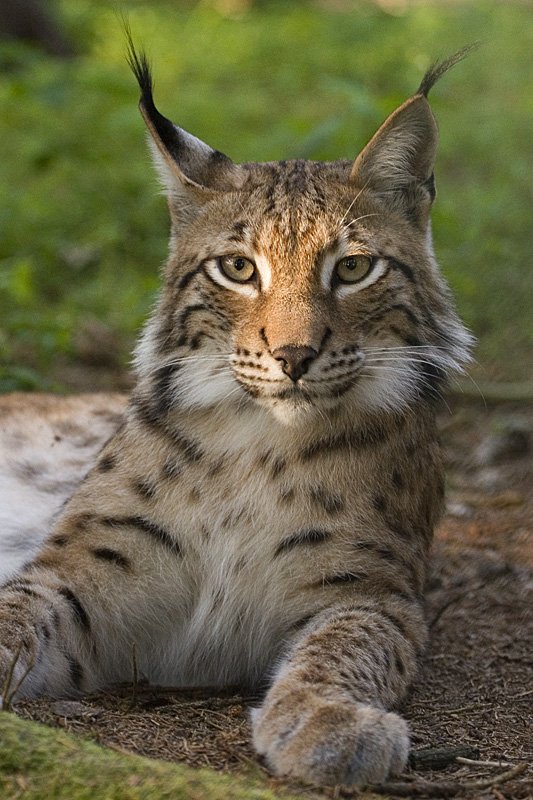
Lynx Reintroduction Tracking — Bohemian Forest
The Šumava National Park and Bavarian Forest National Park — a single transboundary wilderness straddling the Czech-German border — hosts Central Europe's densest reintroduced Eurasian lynx population, with 80 to 100 animals now established in an ancient spruce and beech forest of 600 square kilometres where the species was extirpated in the 18th century. Guided winter tracking expeditions with specialist rangers follow fresh lynx pugmarks — pad prints three times the size of a domestic cat — through deep Šumava snow to find where animals have made kills on roe deer, rested on fallen logs, or scent-marked territories on the forest edge, building a forensic picture of lynx ecology in one of Germany and Czech Republic's last true wilderness landscapes. The chance of actually seeing a lynx is low — perhaps 5% on any given excursion — but the tracking experience itself, moving through silent ancient forest in winter snow with expert commentary, is one of Central Europe's most compelling wildlife encounters regardless of outcome. The Šumava's combination of unlogged forest with standing dead trees, wild river valleys, and the atmospheric bog landscapes of the Modrava plateau creates a wilderness atmosphere absent from most of Western Europe. The forest also holds black stork, black woodpecker, and European otter.
About this spectacle
In the transboundary wilderness of Šumava and Bavarian Forest National Parks, winter tracking expeditions follow specialist rangers through deep snow in search of Eurasian lynx traces. Pugmarks three times the size of a domestic cat's paw press clearly into fresh snowfall, leading trackers to kill sites where roe deer have been taken, rest points on fallen spruce logs, and scent-marked territory boundaries at the forest edge. The forest itself is the experience: unlogged ancient spruce and beech, standing deadwood, frozen river valleys, and the vast open bog plateaus of Modrava — a silence and wildness rare in Western Europe. The chance of glimpsing a lynx is honestly low, around 5%, but the forensic drama of reconstructing an invisible predator's night through its traces, guided by rangers who know individual animals' ranges, delivers a quality of engagement that exceeds many conventional wildlife sightings. Dawn departures into blue winter light, the crunch of snow, raven calls overhead — and occasionally, fresh blood in the snow where 80 to 100 of Central Europe's most elusive cats live unseen.
When to go
Nov — Apr, peak Dec — Mar
Getting there
Nearest airport: PRG. Nearest city: Plzeň.
Booking options
Goyova doesn't process bookings directly. When you tap "Plan this trip" in the app, you'll see options from our partner providers — accommodation, tours, transport — with affiliate links where applicable. See our affiliate disclosure for details.
More like this.
 Peak season
 Aardvark Night Foraging — Kalahari Botswana
Maun, Central District, BW
 Peak season
 Aardvark Night Foraging — Kalahari South Africa
Upington, Northern Cape, South Africa
 Returns Jan 2027
 Adélie Penguin Highway — Ross Sea Antarctica
Cape Royds, Antarctica, AQ