 In season
 Indian Ocean Turtle Aggregation — Aldabra
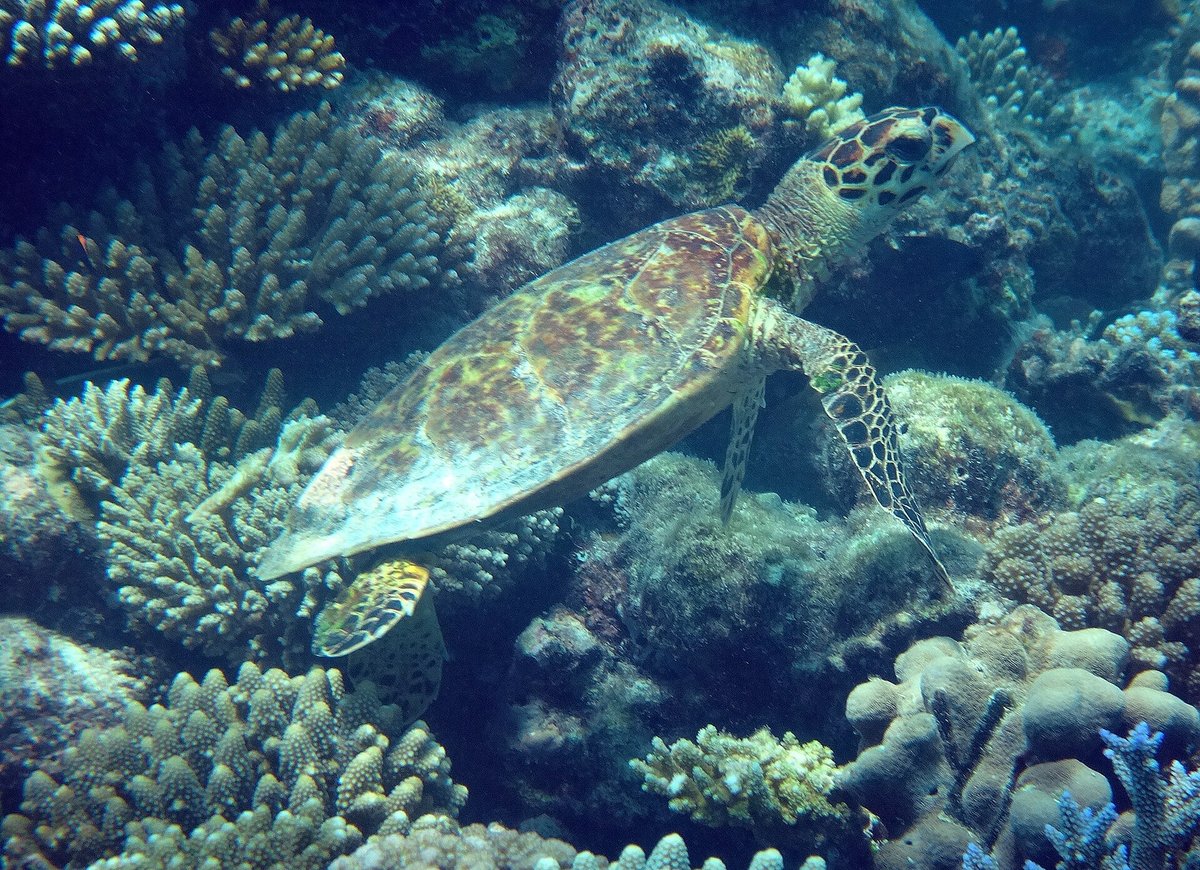
Aldabra Atoll in the Seychelles — the world's second-largest coral atoll and a UNESCO World Heritage Site accessible only to researchers and carefully managed visitor groups — hosts the largest green turtle nesting aggregation in the Indian Ocean, with up to 25,000 female turtles nesting on its beaches annually in a wildlife spectacle of extraordinary primeval character on one of the planet's most isolated and undisturbed natural environments. The atoll's near-total inaccessibility — 1,100 kilometres from mainland Africa with no regular transport — has preserved its ecosystem in a condition of remarkable completeness: 150,000 giant tortoises wander the coralline limestone plain, frigatebird colonies of 60,000 birds nest in the Pemphis scrub, and the coral lagoon supports one of the Indian Ocean's last pristine shark and ray communities. Green turtles can be observed nesting on the beaches by night and feeding in the lagoon's seagrass beds by day, and the combination of turtle nesting, giant tortoises, and the atoll's extraordinary marine life creates a wildlife density reminiscent of the Galápagos in geological isolation. The permits system restricts visitors to small research-affiliated groups, making any Aldabra visit a genuinely rare privilege. The atoll's coralline landscape — a moonscape of sharp limestone pitted with tide pools and shaded by tortoise-browsed scrub — is visually unlike any other place on Earth.
About this spectacle
On Aldabra's remote beaches, up to 25,000 female green turtles emerge from the Indian Ocean each nesting season, hauling themselves up coralline shores under cover of darkness to excavate nests in a slow, ancient ritual. By day, the same turtles graze in the atoll's seagrass-rich lagoon alongside rays and sharks, visible from the shoreline in water of extraordinary clarity. Surrounding the beaches, 150,000 giant tortoises move through a moonscape of razor-edged limestone — champignon formations pitted with tide pools — creating an atmosphere of deep geological time. Overhead, frigatebird colonies of 60,000 birds wheel and display in the Pemphis scrub. The combination of dense megafauna, total absence of human infrastructure, and the silence of one of the planet's most isolated ecosystems produces a sensory experience unlike any other accessible on Earth. Access is restricted to small, research-affiliated groups, meaning the beaches are never crowded and the spectacle unfolds with the same primeval character it has held for millennia. Visitors hear the rhythmic ocean, the scrape of turtle flippers on limestone, and little else.
When to go
Oct — May, peak Oct — Mar
Getting there
Nearest airport: SEZ. Nearest city: Victoria.
Booking options
Goyova doesn't process bookings directly. When you tap "Plan this trip" in the app, you'll see options from our partner providers — accommodation, tours, transport — with affiliate links where applicable. See our affiliate disclosure for details.
More like this.
 Peak season
 Aardvark Night Foraging — Kalahari Botswana
Maun, Central District, BW
 Peak season
 Aardvark Night Foraging — Kalahari South Africa
Upington, Northern Cape, South Africa
 Returns Jan 2027
 Adélie Penguin Highway — Ross Sea Antarctica
Cape Royds, Antarctica, AQ