 Off-season
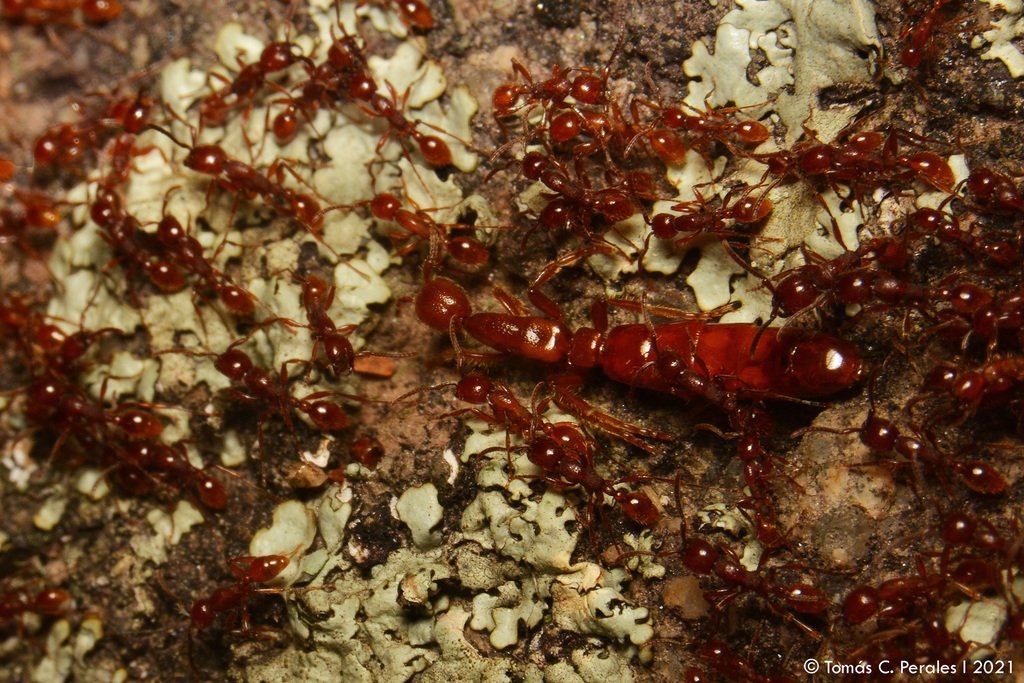
 Army Ant Raid with Antbirds — Costa Rica
The army ant (Eciton burchellii) raid in the lowland forests of Costa Rica's Osa Peninsula and Barro Colorado Island — a column of 200,000 ants advancing through the forest floor, flushing insects, spiders, and small vertebrates as a wave of prey — attracts a retinue of antbirds (ocellated antbird, bicolored antbird, and up to 25 additional species) that follow the column exclusively to catch the fleeing prey, creating one of Neotropical ornithology's most complex mixed-species foraging flocks. The ant raid's combination of the column's audible rustling advance (the fleeing cockroaches' wing-clicks and the antbirds' alarm calls creating a 50-metre radius of sound), the antbirds' precise coordination at the raid's swarm front (each species occupying a specific height and distance from the leading edge), and the entire forest floor's activation creates one of lowland rainforest's most behaviorally complex 30-minute encounters. The ocellated antbird's stately march at the swarm front, never touching the ants it depends on for its entire food supply, creates biology's finest example of mutually beneficial non-contact association.
About this spectacle
Deep in the lowland rainforest of Corcovado National Park, a living wave of 200,000 army ants (Eciton burchellii) advances across the forest floor, turning the understory into chaos. Cockroaches snap their wings in flight, spiders scramble over leaf litter, and small lizards dart for cover — all fleeing a column that stretches far into the dim forest interior. Into this eruption of prey descend the antbirds: the regal ocellated antbird holding position at the swarm's leading edge, the bicolored antbird working the flanks, and up to 25 additional species each locked into their precise foraging niche by height and distance from the front. The soundscape alone is arresting — the dry rustle of millions of legs, the click of fleeing insects, and the sharp, urgent calls of competing antbirds create a 50-metre bubble of sensory intensity. Visitors stand motionless as the column passes within metres, the ants indifferent, the birds utterly focused. It is a 30-minute masterclass in ecological complexity, one of the Neotropics' most behaviorally intricate wildlife encounters, and wholly unlike anything else in rainforest observation.
When to go
Year-round
Getting there
Nearest airport: PJM. Nearest city: Puerto Jiménez.
Booking options
Goyova doesn't process bookings directly. When you tap "Plan this trip" in the app, you'll see options from our partner providers — accommodation, tours, transport — with affiliate links where applicable. See our affiliate disclosure for details.
More like this.
 Peak season
 Aardvark Night Foraging — Kalahari Botswana
Maun, Central District, BW
 Peak season
 Aardvark Night Foraging — Kalahari South Africa
Upington, Northern Cape, South Africa
 Returns Jan 2027
 Adélie Penguin Highway — Ross Sea Antarctica
Cape Royds, Antarctica, AQ